
November 25, 2026
Articles
Milburn Report: Experience is the currency, networks decide who gets paid
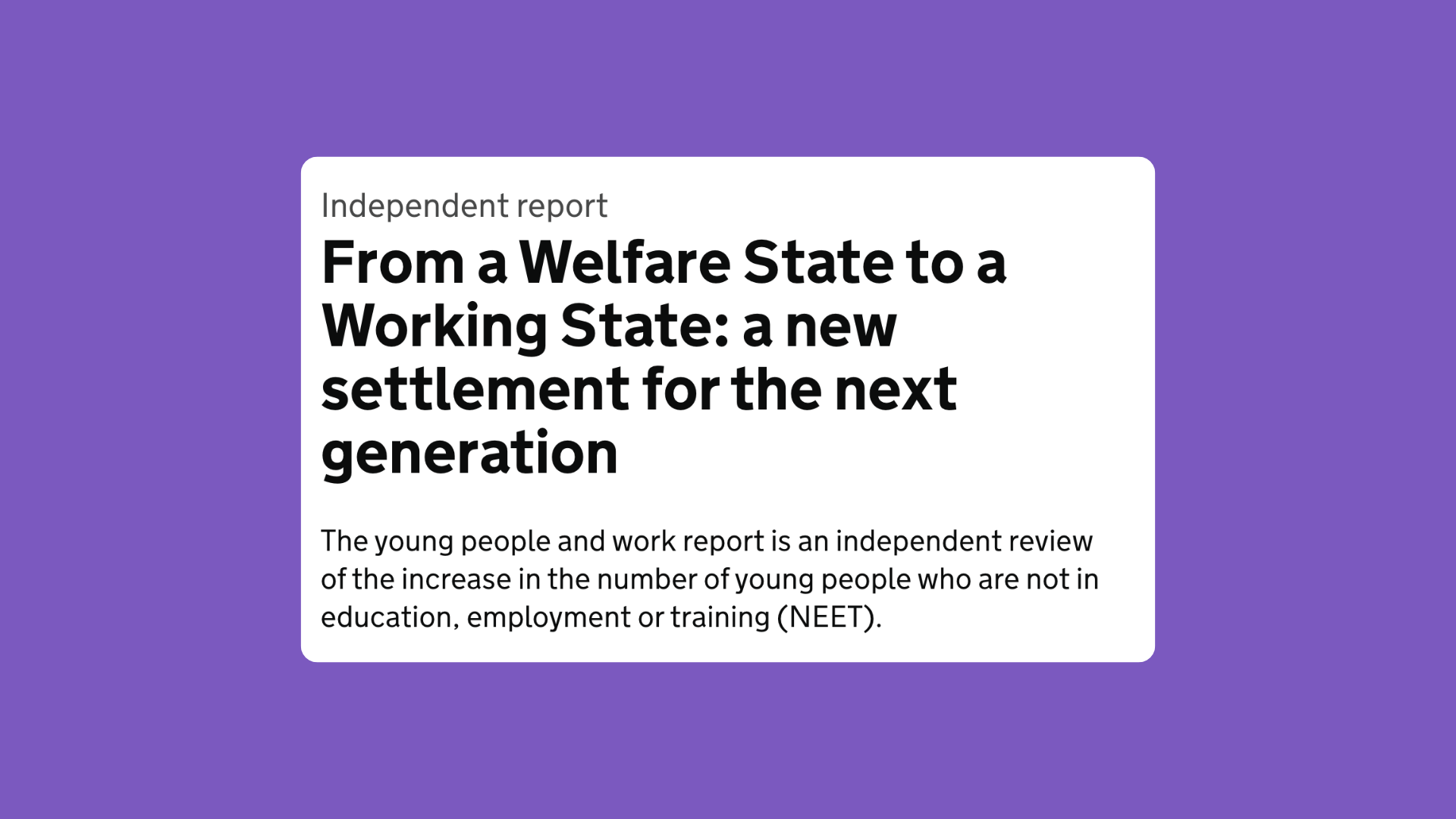
Alan Milburn's final report on young people and work, From a Welfare State to a Working State, keeps coming back to this gap. His review asked young people how confident they felt about each step into work. Most felt able to handle the application itself, from the CV through to the interview.
Confidence dropped on the things outside their control. Only 28% felt confident about having suitable experience, and 31% about having personal networks to help them find an opening.
As Milburn puts it: "The problem is not simply whether a young person wants to move. It is what is standing between them and the next step."
For many young people, the barrier is access. Milburn's answer is a whole system reset, with government, education, welfare and employers each playing a part. No employer or platform fixes this on their own. Employers still control some of what happens, and this piece looks at those parts.
Who gets experience in the first place
When the review asked NEET young people who wanted to work what was holding them back, lack of experience came out on top. 53% named experience as their single biggest obstacle, and a further 31% said they lacked the right skills for the jobs they wanted.
Milburn calls experience "a form of currency in the labour market". Employers ask for experience because hiring someone without a track record feels like a risk. You'll know the logic if you've ever sifted a few hundred applications. The trouble is, young people don't get the chance to build experience on equal terms.
The review interviewed 23 young people aged 15 and 16 who had recently finished a placement. Many found their placement through parents or friends of parents. Those without family connections had fewer choices.
In Milburn's words: "A family able to make a call to an employer can open a door that another family cannot." For too many young people, a first job depends on a phone call their family has no one to make.
Young people trust people like them
Help from the people around them is thin too. NEET respondents were less likely than their peers to say family, education providers or friends had helped them towards work, education or training. Only 4% said they had a teacher or tutor to rely on when they needed support, compared with 21% of their non-NEET peers.
The review also asked who young people saw as most credible in finding solutions. 45% of NEET respondents chose young people with lived experience, well ahead of employers and business leaders at 19%. Educators and training providers came in at 16%, and charities and youth organisations at 11%.
If you run early careers outreach, this one's worth sitting with. Young people listen most to people who've stood where they stand. A stand at a careers fair or a polished brand video won't do the same job.
Build the network young people lack
If family networks decide who gets a first chance, employers need to build networks on purpose instead of leaving young people to rely on the ones they're born into. We see this as just one part of the answer, and the part we work on every day.
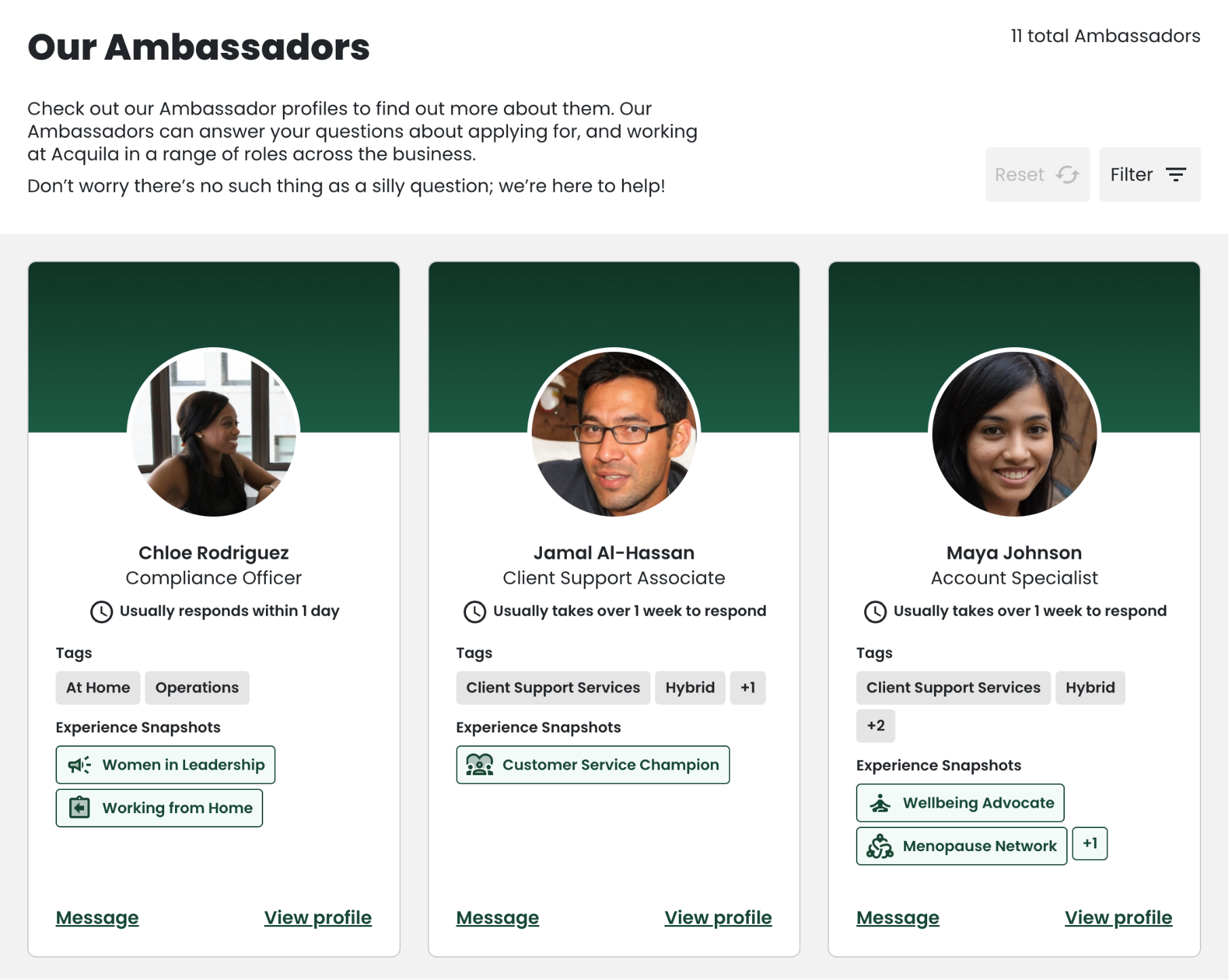
Digital advocacy works this way on the Connectr platform. Employers set up safe, moderated one-to-one conversations between young people and Digital Mentors, employees who volunteer to talk honestly about their work and their organisation. When mentors share a similar background, young people hear from the kind of person the review says they trust most.
Here's what happens when employers open those conversations up to everyone, whether or not they have a family contact:
- At GSK, 1 in 4 users connected with a GSK mentor, and over one third of successful hires engaged with the platform before joining.
- At British Airways, apprentices who used the platform including connecting with mentors and browsing employee generated content were 6x more likely to receive an offer.
One young person put it: "My mentor has really made me feel comfortable, seen and heard. It's really nice to talk to someone who understands my perspective. It makes me feel like I matter, my voice matters, as well as my personal and career goals."
Exposure needs follow-through
Milburn flags a risk here: "A placement can happen but not necessarily leave the young person feeling more capable or more connected to work."
Turning up to a workplace for a week won't build confidence by itself. Young people need help making sense of what they saw and someone to go back to with questions. In the review, 52% wanted help finding suitable jobs, courses or training, and 37% wanted help building skills or experience.
In practice, young people need honest content about the role and a named person to message afterwards. Prompts to reflect on whether the work suits them help too. Without these, a placement ends up as a visit rather than a step forward.
Keep supporting after the offer
Getting a young person hired is only half the work. Milburn argues employers need better access to induction and retention support, and "somebody to call before a manageable problem becomes a failed hire".
You don't have to wait for government to act on this. The weeks between offer and first day carry risk for any new starter, and more for a young person with no one to talk things through with. Pre-boarding gives new starters a digital buddy and a community to join before day one, so they've got someone to call when a worry comes up.
AWE reduced reneges by 74% with Connectr's Pre-boarding module. A first job only changes things for a young person if they turn up on day one and stay.
We back Milburn's reset
We support Milburn's call for a whole system reset. His First Chance asks employers to create more genuine first jobs, more youth apprenticeships and much wider access to meaningful work experience. He suggests, ideally, 10% of entry-level vacancies should go to young people who are NEET or at significant risk of becoming NEET.
Vacancies alone won't meet those asks. Young people have to hear about a role and believe the role is meant for someone like them.
Milburn also says plainly employers need backing: "If government asks employers to take more chances on young people who need additional support, government must also help employers make those chances succeed." We welcome his call for clear guidance on positive action as well. Employers who want to prioritise young people deserve to know where they stand legally.
We want to be honest about where we fit. Connectr won't solve the NEET crisis, and no single company will. The causes run through education, health, welfare and the labour market. Our part is helping employers give young people the networks and information the review shows they're missing, then measuring whether the work makes a difference. We'll keep sharing what we learn, because social mobility and fairer candidate experience are why we do this.
Employers will keep asking for experience. The question is whether only well-connected young people get the chance to gain some.
Want to talk through your organisation's part in this? Get in touch.
Early Careers
Turn your outreach into outcomes.
Keep talent engaged long after first contact. Effortlessly build an active early careers pipeline through a personalised candidate experience that delivers real-time insights.

Employer Brand
Activate your employer brand.
Tackle misconceptions and nurture awareness through authentic experiences, with a platform that tells you what’s working and what isn’t.

Talent Acquisition
Transform your recruitment strategy into a reality.
Build a best-in-class candidate experience that uncovers top talent and reduces time-to-hire without compromising on quality.

Other resources
Don’t miss these


Ready for more engaged candidates and better prepared hires?

